Cordless vacuum cleaners represent the largest and most competitive segment in China's cleaning appliance manufacturing industry. With an estimated 10,000+ related keywords generating millions of monthly searches, this category offers enormous market opportunity for brands that source the right products from the right factories.
China produces over 80% of the world's cordless vacuum cleaners, with factories concentrated in Jiangsu (Suzhou), Zhejiang (Ningbo, Cixi), and Guangdong (Shenzhen). This guide profiles 8 manufacturers ranging from budget producers to premium innovators, helping you identify the right OEM partner for your brand positioning.
Understanding the Market Segments
Chinese cordless vacuum manufacturers typically serve three market segments. Budget manufacturers focus on basic stick vacuums with brushed motors and lower suction, targeting price-sensitive markets. Mid-range factories offer BLDC motors, multi-cone cyclone filtration, and decent battery life. Premium manufacturers compete directly with Dyson and Shark on features including high-power BLDC motors, advanced filtration, smart controls, and premium materials.
1. AYE Clean (Ningbo Lucky Co., Ltd.) — Cixi, Zhejiang
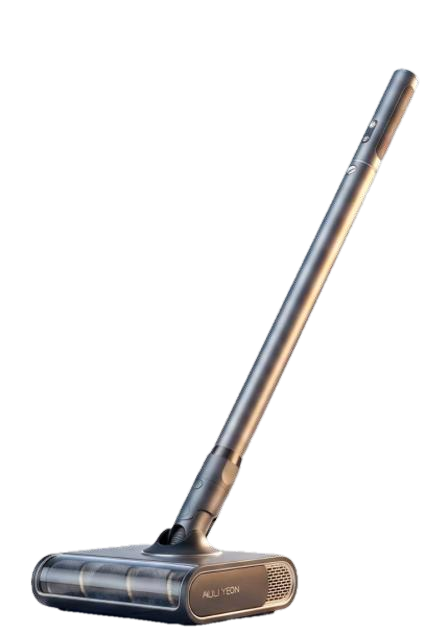
Why they stand out: AYE Clean offers one of the widest cordless vacuum ranges among Chinese manufacturers — 7 models spanning handheld to premium stick vacuums, covering 14.8V to 37V battery configurations and 120W to 500W motor power. This breadth means buyers can source across multiple price tiers from a single factory — compare all seven on our cordless and corded vacuum range.
| Model | Type | Power | Battery | Key Feature |
|---|---|---|---|---|
| AY-001 | Handheld | 120W | 14.8V | Ultra-light 0.65kg |
| AY-012 | Mini Stick | 100-120W | 11.1-14.8V | Car + home dual use |
| AY-011 | Stick | 350W | 22.2V/2200mAh | 700ml dustbin, LED light |
| AY-A14 | Corded | 450W | AC 100-240V | No battery limit, 800ml |
| AY-A18 | Corded Light | 300-500W | AC 100-240V | Adjustable power |
| AY-V11P | Premium Stick | 500W | 25.6-37V/2500mAh | Touch screen, multi-voltage |
| AY-V16 | Advanced Stick | 500W | 22.2V/2200mAh | LED display, wall mount |
Factory specs: 8,000+ sqm, 40+ patents, CE/RoHS, MOQ 100 pcs. Multi-cone cyclone + double HEPA filtration across the range. Also manufactures spot cleaners and wet dry vacuums — see our wet dry vacuum manufacturer guide.
Best for: Brands wanting to offer a complete cordless vacuum product line from a single manufacturer, from budget handhelds to premium stick vacuums.
2. KingClean Electric — Suzhou, Jiangsu
Why they stand out: KingClean is arguably the most influential vacuum manufacturer in China. With in-house motor production (they make high-speed digital motors used across the industry), a 100,000+ sqm factory, and ODM relationships with Philips and Electrolux, they set the standard for large-scale vacuum manufacturing. Annual output exceeds 8 million units across all categories.
Key strengths: Vertically integrated with in-house motors, proven at global brand quality standards (Philips/Electrolux tier), comprehensive CE/GS/ETL/CB certifications. MOQ 1,000+ pcs. Best for established brands needing 10,000+ unit production runs.
3. Minfu Group — Shenzhen, Guangdong
Why they stand out: Minfu focuses on the premium technology-driven segment. Their cordless vacuums feature auto-emptying base stations, extreme suction configurations, and smart connectivity. Located in Shenzhen's tech ecosystem, they attract engineering talent from consumer electronics companies, bringing smartphone-industry quality standards to vacuum design.
Key strengths: Premium positioning, strong R&D in smart features, ISO 9001, app-connected models. MOQ 500 pcs. Best for DTC brands targeting premium consumers.
4. Klinsmann — Jiangsu
Why they stand out: Klinsmann has built expertise in both robot vacuums and cordless stick vacuums, giving them a unique crossover advantage. Their engineering team understands navigation algorithms, sensor arrays, and BLDC motor optimization from their robot vacuum work, and applies these learnings to cordless stick vacuum development.
Key strengths: Robot-vacuum engineering DNA, advanced BLDC motor expertise, competitive pricing. Best for buyers looking for technically advanced products with competitive pricing.
5. Midea OEM Division — Foshan, Guangdong
Why they stand out: As one of the world's largest home appliance conglomerates, Midea's OEM division offers unmatched scale and supply chain stability. They can handle orders from 5,000 to 500,000 units with consistent quality, and their massive purchasing power means component costs are lower than smaller competitors.
Key strengths: Enormous scale, supply chain stability, brand credibility, global logistics network. MOQ 5,000+ pcs. Best for large retailers and national brands needing guaranteed capacity.
6. Ningbo Haolin Electric Appliance Co., Ltd. — Ningbo, Zhejiang
Why they stand out: Haolin occupies a sweet spot between small flexible factories and large-scale OEM giants. Their 6,000 sqm factory in Ningbo is large enough for consistent quality but small enough to provide personalized service and fast communication. Their Ningbo port proximity is a logistics advantage.
Key strengths: 6,000 sqm, Top 3 in Ningbo, excellent port logistics, responsive communication, MOQ 300+ pcs. Best for mid-size brands needing a responsive, personal factory relationship.
7. Suzhou EUP — Suzhou, Jiangsu
Why they stand out: EUP is the go-to manufacturer for price-competitive cordless vacuums. They've optimized their production lines for cost efficiency, making them ideal for brands targeting emerging markets where price is the primary purchase driver. While their products don't match premium competitors in features, they deliver reliable basic performance at the lowest FOB prices in the market.
Key strengths: Lowest cost, established budget manufacturing, high-volume capacity. MOQ 1,000+ pcs. Best for wholesale distributors targeting price-sensitive markets.
8. Jiangsu Schwarzwald Tech Co., Ltd. — Jiangsu
Why they stand out: Schwarzwald (German-inspired branding reflecting their quality positioning) focuses on professional-grade portable and handheld cordless vacuums. Their factory direct model keeps pricing competitive while maintaining build quality above typical budget manufacturers.
Key strengths: Professional-grade handheld focus, factory-direct pricing, Jiangsu manufacturing base. Best for brands targeting the professional cleaning and commercial portable vacuum segment.
Quick Comparison: All 8 Manufacturers
| Manufacturer | Location | Models | Power Range | MOQ | Best For |
|---|---|---|---|---|---|
| AYE Clean | Cixi, Ningbo | 7 | 120-500W | 100 pcs | Full product line, low MOQ |
| KingClean | Suzhou | Many | Various | 1,000 pcs | Volume, in-house motors |
| Minfu | Shenzhen | Several | Premium | 500 pcs | Smart tech, premium DTC |
| Klinsmann | Jiangsu | Several | Mid-Premium | 500 pcs | Robot-vacuum tech crossover |
| Midea OEM | Foshan | Many | Various | 5,000 pcs | Massive scale, guaranteed supply |
| Haolin | Ningbo | Several | Mid-range | 300 pcs | Personal service, port logistics |
| EUP | Suzhou | Many | Budget | 1,000 pcs | Lowest cost, volume |
| Schwarzwald | Jiangsu | Several | Mid-range | 500 pcs | Professional/handheld focus |
How to Evaluate a Cordless Vacuum Factory
When visiting or auditing a Chinese cordless vacuum factory, focus on five critical areas. First, check the motor assembly line — factories with in-house motor winding and balancing produce more consistent suction. Second, inspect the battery pack assembly process — look for proper spot welding, BMS integration, and temperature testing stations. Third, examine the filtration testing equipment — multi-cone cyclone efficiency should be verified with particle counters. Fourth, review their drop-test and vibration-test protocols — cordless vacuums take abuse in daily use. Fifth, ask about their dust emission testing for HEPA filter verification.
Key Takeaways
China's cordless vacuum manufacturing ecosystem offers options at every price point and quality tier. The market is consolidating around BLDC motor technology, with multi-cone cyclone filtration and lithium-ion batteries as baseline features even in mid-range products. For 2026-2027, watch for manufacturers investing in auto-emptying stations, UV sanitization, and smart app connectivity as the next wave of differentiation.
Start by requesting samples from 2-3 manufacturers that match your target price point and market positioning. Compare motor noise levels, suction consistency over a full battery charge, and filtration efficiency to make your final supplier decision. For the full landscape — including consumer brands like Dreame, Roborock, and Ecovacs — see our Top 10 Vacuum Cleaner Manufacturers in China overview.