Short answer: to spot clean carpet without damaging the fibers, act fast, scrape and blot (never rub), test your cleaner on a hidden area, apply as little solution as possible from the outside of the stain inward, then rinse with plain water and extract until the spot is only slightly damp. Most fiber damage comes from three mistakes — scrubbing, the wrong chemistry for the fiber (especially on wool), and leaving the carpet soaked — not from the stain itself.
What Actually Damages Carpet Fibers During Spot Cleaning
Carpet pile is made of twisted yarn tufts. When the twist stays tight, the carpet looks even. Spot cleaning goes wrong when it attacks that structure or leaves something behind:
- Mechanical damage. Hard scrubbing, stiff brushes and sharp scrapers untwist and fray the yarn tips. The area then reflects light differently and looks lighter or "fuzzy" even when it is perfectly clean.
- Chemical damage. Bleach, strong alkaline cleaners and some oxidizers can remove dye or weaken natural fibers. Wool is the most sensitive.
- Heat. Heat can set protein stains (blood, egg, dairy, vomit) and can distort some fibers.
- Over-wetting. Water that soaks into the backing carries dissolved soil with it. As the surface dries, that soil wicks back up and the stain "reappears" — sometimes as a brown ring.
- Residue. Detergent left in the pile is sticky. It grabs new soil, so the cleaned spot can turn darker than the carpet around it.
Know Your Carpet Fiber Before You Start
Check the label on the back of a rug or the original carpet paperwork. If you cannot find it, treat the carpet as the most sensitive fiber it could be and test on a hidden area.
| Fiber | How it behaves with stains | What to avoid |
|---|---|---|
| Nylon | Durable and resilient; can take up colored stains (drinks, food dyes) if left too long | Bleach, letting dye-based spills sit |
| Polyester (incl. PET) | Resists water-based stains well, but holds on to oily soil | Over-scrubbing, which crushes the pile |
| Olefin (polypropylene) | Very stain resistant to water-based spills; attracts oil and grease | Excess heat, which can distort the fiber |
| Wool | Naturally soil-resistant, but sensitive to high-pH (alkaline) cleaners, bleach and heat | Hot water, steam, strong alkaline or "oxy" cleaners — use a wool-safe product |
| Natural plant fibers (jute, sisal, seagrass) | Absorb water quickly and can brown or shrink when wet | Wet cleaning in general; follow the maker's dry-cleaning advice |
How to Spot Clean Carpet, Step by Step
- Act quickly. A fresh spill sits mostly on the surface. The longer it stays, the deeper it travels and the more chance it has to dye the fiber.
- Remove solids first. Lift food, mud or vomit with a spoon or a blunt plastic scraper, working toward the center. Let mud dry completely and vacuum it before any wet cleaning.
- Blot up liquid. Press a clean white cloth or paper towels into the spot and lift. Stand on the towel if needed. Change to a clean section each time. Do not rub.
- Test your cleaner. Apply a little to a hidden area (inside a closet, under furniture), wait a few minutes and blot with a white cloth. Any color on the cloth or change in the carpet means stop.
- Apply a small amount of solution from the outside in. Working inward keeps the stain from spreading. Use only enough to dampen the stained fibers, not the backing.
- Let it dwell, then agitate gently. Give the solution a few minutes to loosen the stain. If needed, work it with your fingertips or a soft brush in the direction of the pile.
- Rinse with plain water. This step is the one most people skip. Spray or dab clean water to flush out the detergent.
- Extract or blot until barely damp. With a spot cleaner, finish with a few slow "dry" passes — suction only, no spray. Without a machine, press with dry towels until no more moisture transfers.
- Groom and dry. Brush the pile upright with your hand, then speed drying with a fan or open window. Keep foot traffic off until it is dry.
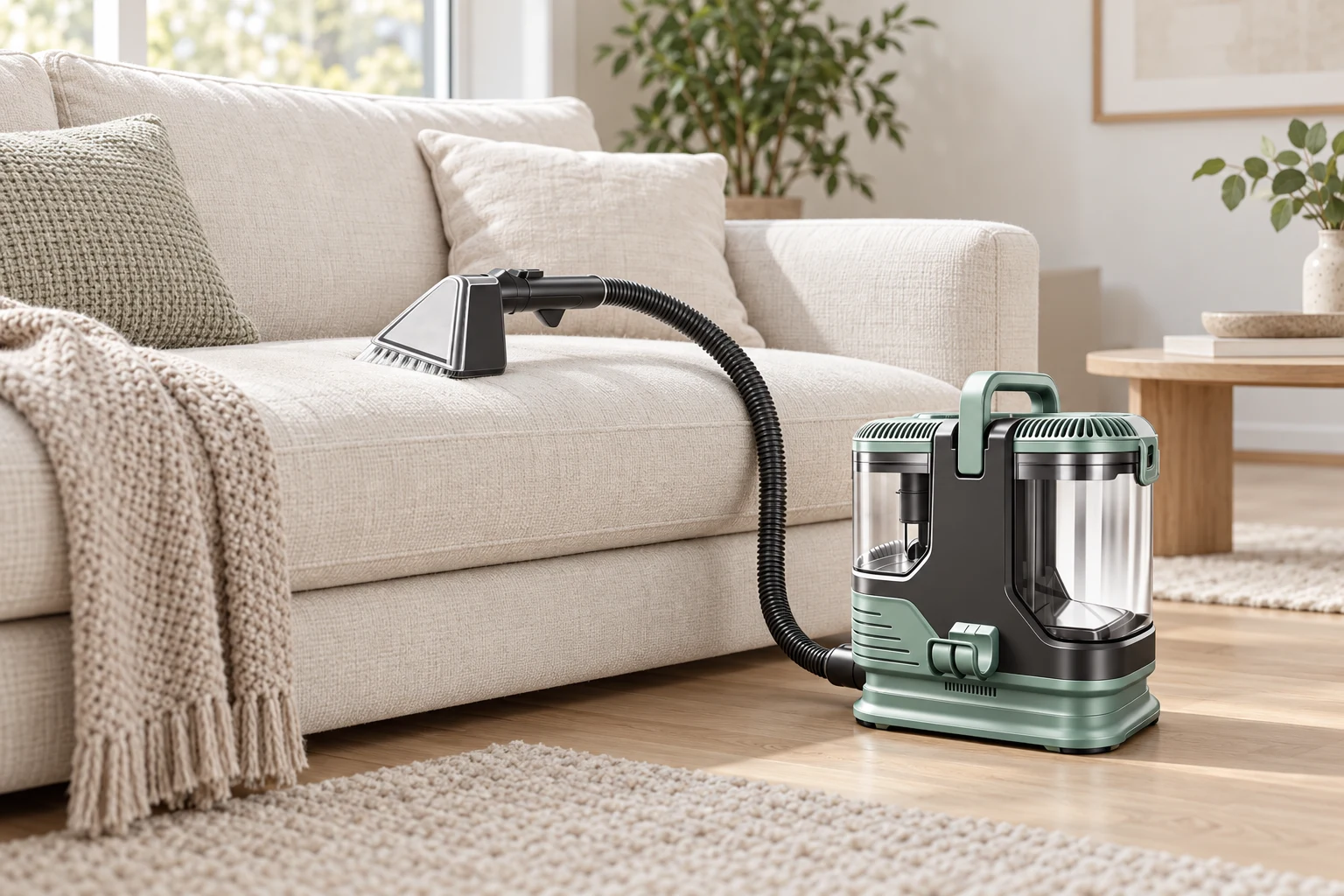
Cleaning carpets for customers rather than your own home? See our portable spot cleaner range for the specs that matter in rinse-and-extract work.
Which Solution for Which Stain?
The single most useful distinction is whether the stain is water-based or oil-based. Plain water does little on grease; oily stains usually need a detergent solution worked in carefully or, for stubborn marks, a carpet-safe dry solvent spotter.
| Stain | Type | First approach | Notes |
|---|---|---|---|
| Coffee, tea, juice, soda | Water-based, dye/tannin | Blot, then mild detergent solution, rinse | Sugar residue attracts soil — rinse thoroughly |
| Red wine | Water-based, dye | Blot fast with cool water, then detergent solution | Old dye stains may need a carpet-specific spotter or a professional |
| Milk, egg, blood | Protein | Cool water only, then detergent | No heat — it sets proteins |
| Pet urine and vomit | Protein / organic | Blot or remove solids, enzyme cleaner, extract | See our pet stain cleaner guide |
| Cooking oil, butter, makeup | Oil-based | Blot, then detergent solution; a dry solvent spotter on a cloth for stubborn marks, then rinse | Never pour solvent directly onto the carpet — it can attack the backing adhesive |
| Mud | Particulate | Let dry, vacuum, then treat any remaining mark | Wet mud smears deeper into the pile |
For spot cleaning by hand, a few drops of clear, mild dish soap in a cup of lukewarm water is the common starting point — less is better because every drop has to be rinsed out again. Do not put dish soap in a spot cleaner's tank: it foams too much and can overflow the dirty tank, so use a low-foam carpet extractor solution in the machine. Avoid colored soaps, laundry detergent with optical brighteners and anything containing bleach. When in doubt, use a carpet spotter that carries the Carpet and Rug Institute (CRI) Seal of Approval.
Spot Cleaning by Hand vs With a Portable Spot Cleaner
A cloth and spray bottle can handle a small fresh spill. The limit is extraction: by hand you can only press moisture into a towel, so most of the rinse water and dissolved soil stays in the carpet. A portable spot cleaner sprays clean water from one tank and vacuums the dirty liquid into a second tank, so you can rinse several times without soaking the backing.
| Cloth + spray bottle | Portable spot cleaner | |
|---|---|---|
| Best for | Small, fresh, surface spills | Spills that soaked in, repeat spots, light-colored carpet, pet accidents |
| Rinsing | Limited — every rinse adds moisture | Repeated rinse-and-extract cycles |
| Residue left behind | Higher | Lower — dirty water goes into the tank |
| Drying time | Longer | Shorter after dry suction passes |
| Risk of rings / wicking | Higher if over-wetted | Lower when you finish with suction-only passes |
What to look for in a machine
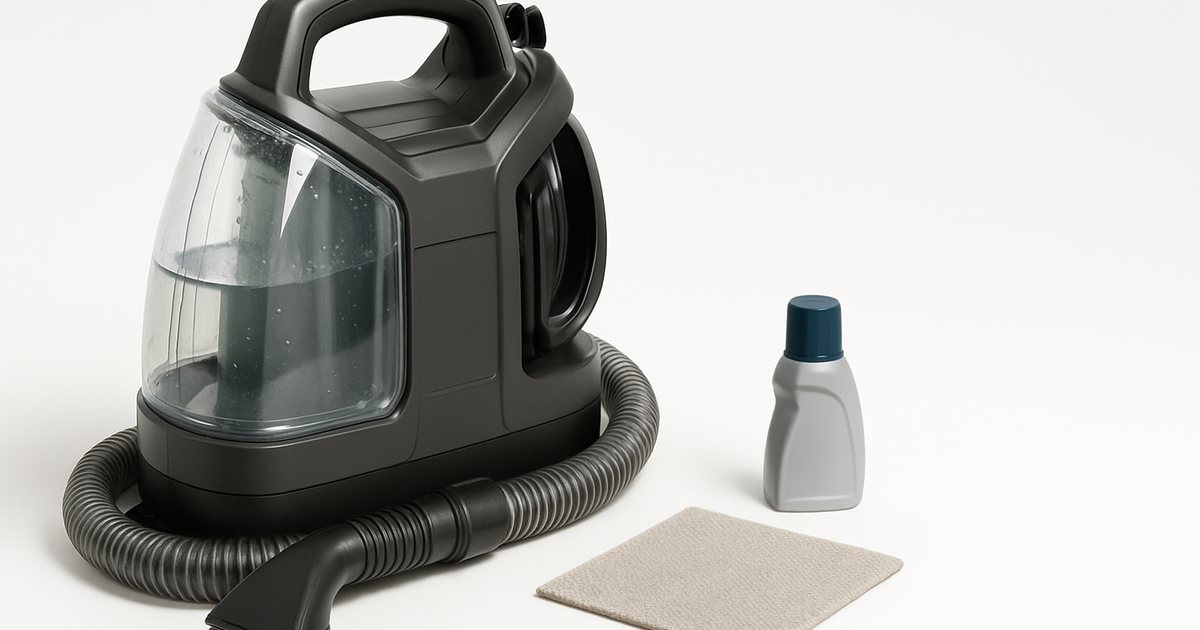
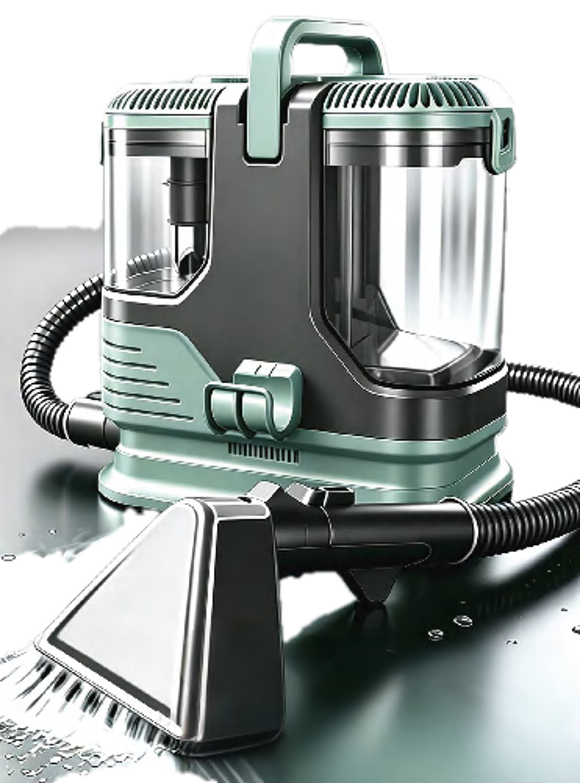
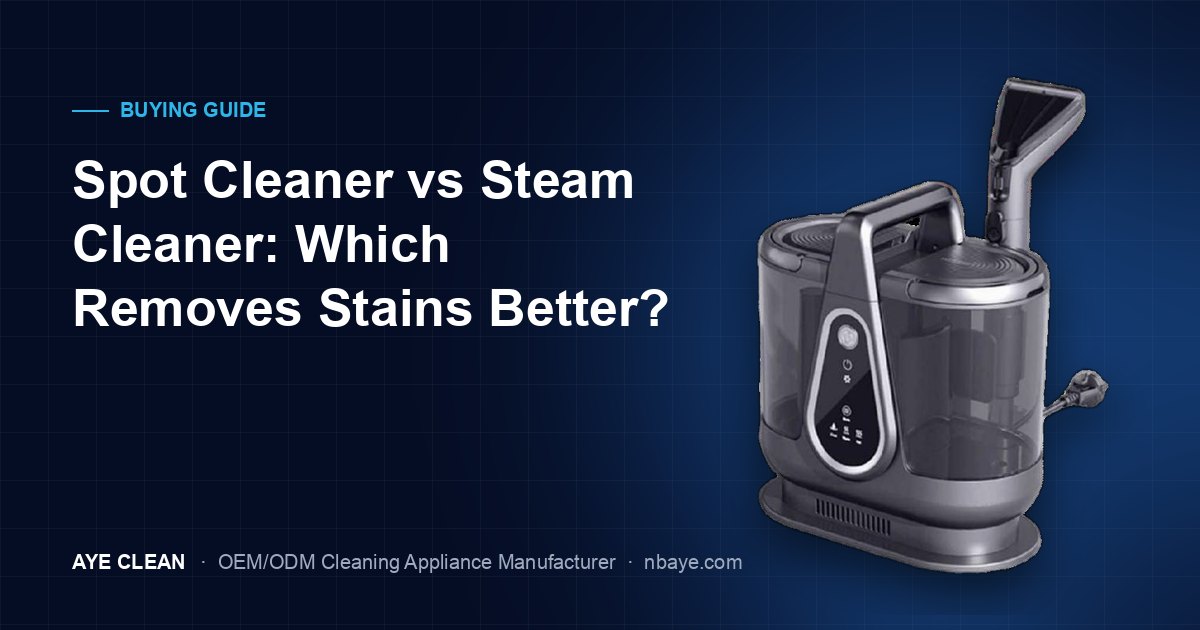
Suction is the spec that decides how damp the carpet is left. Tank size decides how many rinse passes you can do per fill, and hose length decides whether you can reach stairs and car seats. Here are the catalogue specifications of AYE Clean's four spot cleaners for reference:
| Model | Power | Vacuum | Clean / dirty tank | Hose | Heating |
|---|---|---|---|---|---|
| AY-S508 | 400 W | 16 kPa | 950 / 500 ml | 1.7 m | No |
| AY-S506 | 600 W | 16–17 kPa | 2000 / 1000 ml | 1.2 m | No |
| AY-S507 | 1750 W | 17 kPa | 2200 / 1000 ml | 1.8 m | Water heating 60±5°C + steam |
| AY-S506S | 1800 W | 17 kPa | 2000 / 1000 ml | 1.2 m | Water heating 60±5°C + steam |
On heated models, use cool water for the first passes on protein stains and on wool if your model allows it (check the user manual for how the heating function is switched), and keep steam for greasy residue on synthetic carpet. Our spot cleaner vs steam cleaner comparison explains when heat helps and when it hurts.
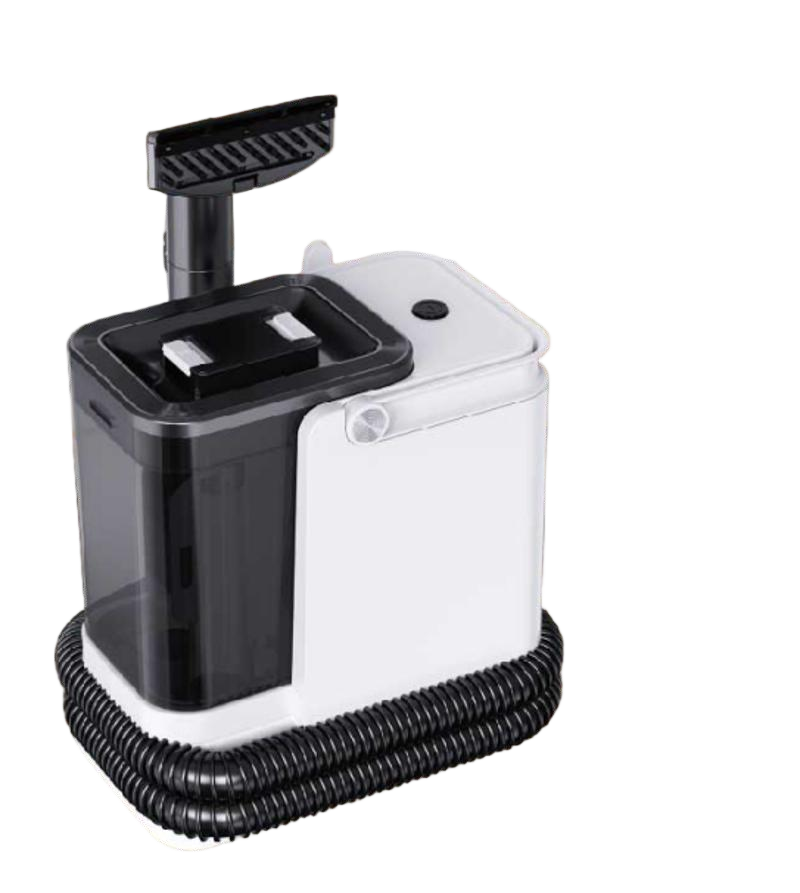
How to Use a Spot Cleaner on Carpet Without Over-Wetting
- Use a low-foam solution at the dilution on the label. High-foam household cleaners can overflow the dirty tank and leave more residue.
- Spray on the forward stroke, vacuum on the backward stroke. Overlap your passes slowly; fast passes leave water behind.
- Finish with two or three suction-only passes. Removing more moisture lowers the risk of rings and wicking.
- Watch the dirty tank. When the extracted water runs close to clear, stop rinsing.
- Empty and rinse the tanks after use. Old dirty water in the tank smells and can grow bacteria.
Choosing a machine? Our guide to choosing the right spot cleaner covers suction, tank sizing and detergent compatibility in more detail.
Common Spot Cleaning Mistakes
- Scrubbing in circles. It frays the yarn tips and spreads the stain.
- Using too much detergent. More soap means more residue and a spot that resoils quickly.
- Skipping the rinse. The stain may look gone, but the detergent left behind will pull in dirt.
- Hot water on protein stains or wool. It can set the stain or damage the fiber.
- Mixing products. Never combine bleach with ammonia or acids. Rinse one product out before trying another.
- Leaving the spot soaked. Wet backing leads to wicking, browning and odor.
When to Call a Professional
Spot cleaning handles surface spills. Call a professional cleaner — ideally one trained to the IICRC S100 carpet cleaning standard — if the stain has reached the pad, if a large area got soaked, if the carpet is wool or a natural plant fiber and the stain is significant, or if the color has already changed (dye loss or bleach spots need repair, not cleaning).
For Brands and Retailers: What This Means for a Spot Cleaner Line
Complaints such as "it left a ring" or "the stain came back" often trace back to over-wetting and residue rather than to the machine's power. When you specify a private-label spot cleaner, suction, a clear dirty tank and a user manual that explains the rinse step and suction-only finish matter as much as the motor wattage. AYE Clean builds all four spot cleaner models above for brands and distributors through OEM/ODM manufacturing; send your target market and quantity through a quote request to confirm current MOQ, lead time and pricing.
Last Updated: 2026-11-06