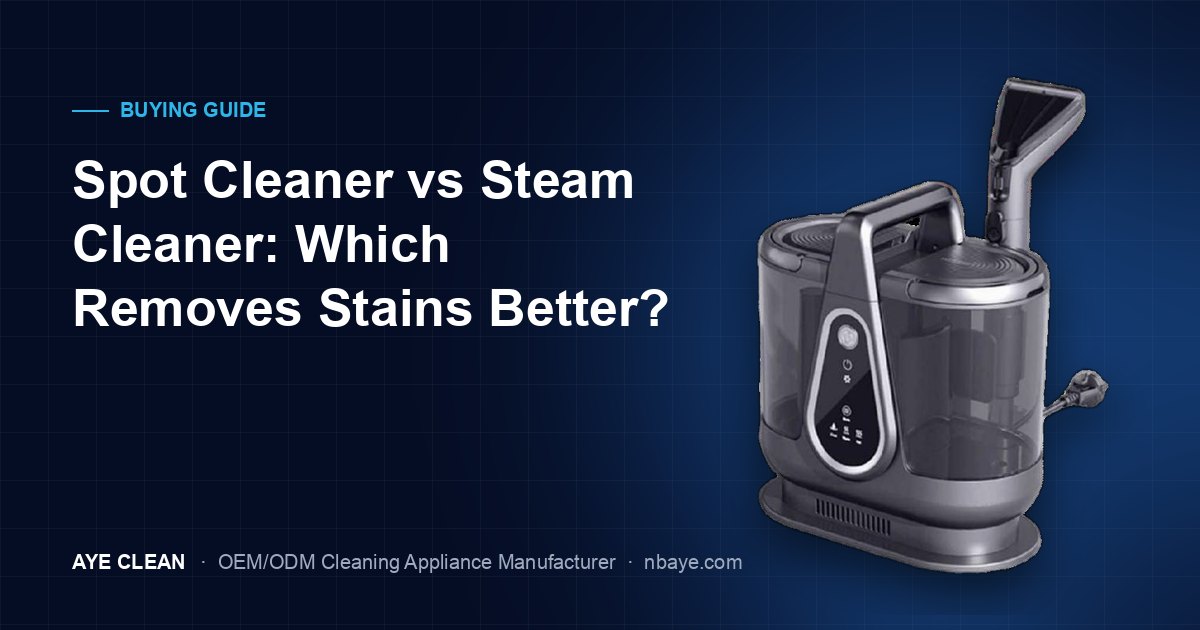
Not all spot cleaners are created equal. The difference between a machine that lifts a wine stain in one pass and one that leaves a damp pink shadow comes down to a handful of engineering decisions — suction power, tank design, hose reach, and whether steam is part of the equation.
We manufacture spot cleaners at our factory in Cixi, China, and we have tested every combination of motor, pump, and tank layout you can imagine. This guide shares what we have learned about the 7 factors that actually matter when choosing a spot cleaner — whether you are buying one for your home, sourcing for your brand, or evaluating OEM options.
1. Suction Power: The Single Most Important Spec
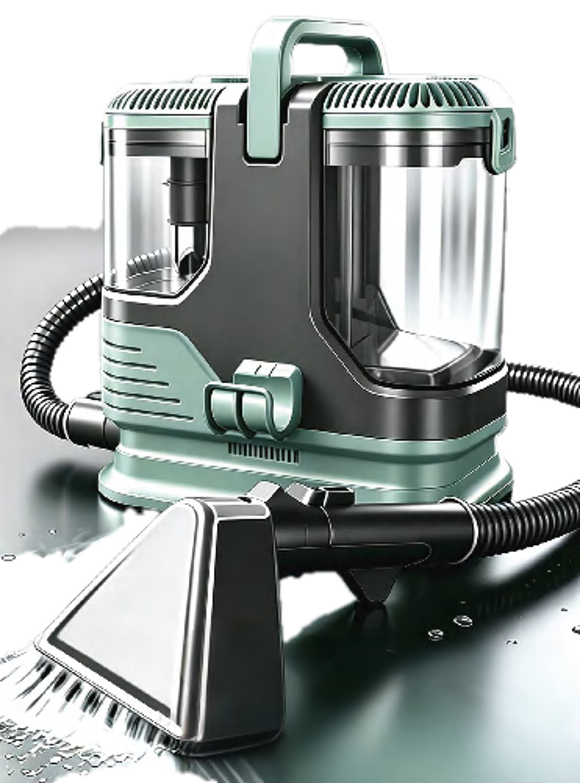
Suction power, measured in kilopascals (kPa), determines whether the machine actually removes the stain or just pushes it around. Here is what the numbers mean in practice:
| Suction (kPa) | Performance Level | What It Can Handle |
|---|---|---|
| < 10 kPa | Weak | Fresh surface spills only — struggles with anything dried or deep |
| 10-14 kPa | Adequate | Fresh spills and light stains on upholstery; may leave dampness |
| 15-17 kPa | Strong | Dried coffee, wine, pet accidents, car seats — one-pass extraction |
| 18+ kPa | Professional | Commercial use, heavily soiled carpet, detailing shops |
A common mistake: judging suction by wattage alone. A 1800W spot cleaner with a poorly designed airpath can deliver less suction than a 600W unit with an optimized motor and sealed hose system. Always check the kPa rating, not just the wattage. Our compact AY-S506 runs at only 600W but still delivers 17 kPa because the internal airpath is short and sealed.
2. Tank Design: Separate vs Combined
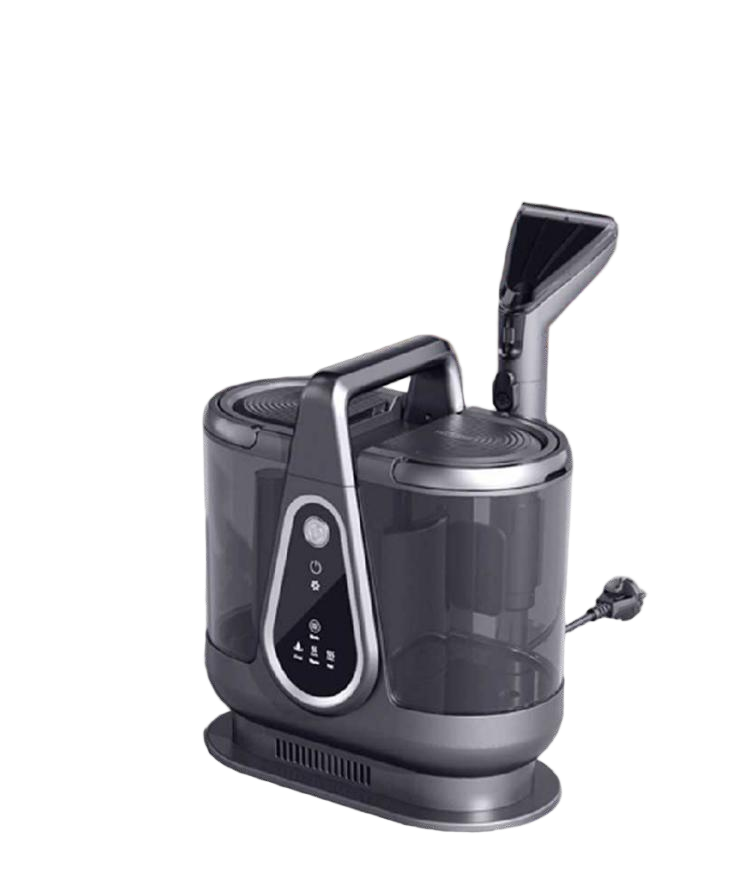
Every spot cleaner has at least two water reservoirs: one for clean solution (water + detergent) and one for dirty water recovery. How these tanks are designed affects convenience, cleaning time, and hygiene.
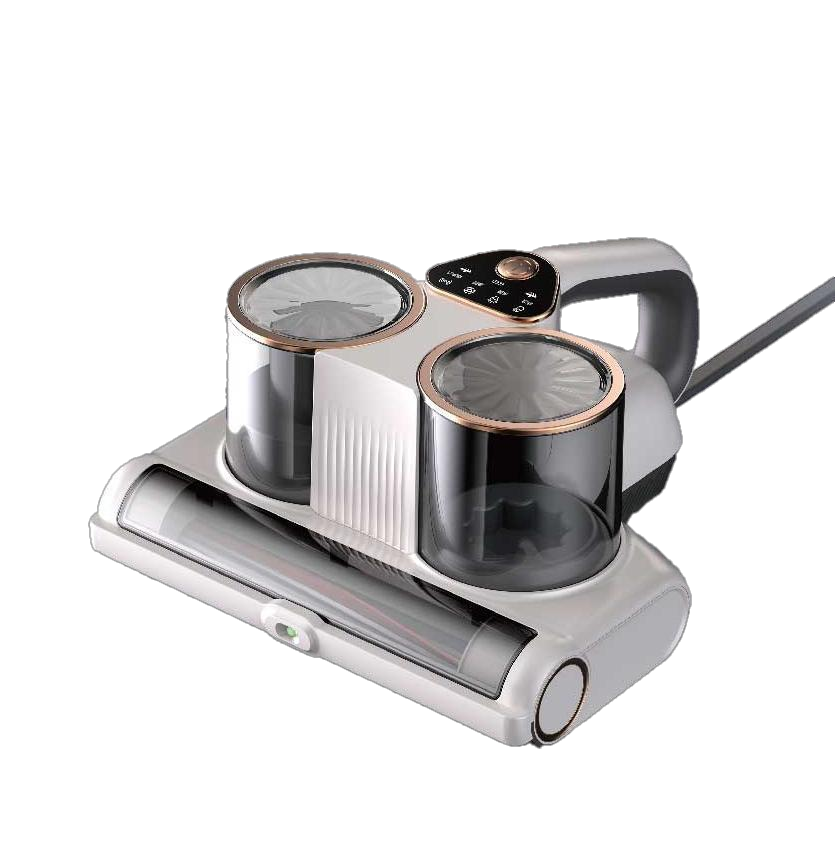
Separate dual tanks (recommended): Clean and dirty water never mix. You can see exactly how dirty the extracted water is — useful feedback for knowing when a stain is fully removed. Emptying and refilling each tank independently is faster and cleaner.
Combined single tank with divider: Cheaper to manufacture, but clean and dirty water can cross-contaminate if the internal divider seal wears. We stopped offering this design in 2024 after customer feedback about odor buildup.
Tank sizing guide:
| Use Case | Clean Tank | Dirty Tank | Example Model |
|---|---|---|---|
| Quick single-spot fixes | 500-950ml | 300-500ml | AY-S508 (950ml / 500ml) |
| Full sofa or car interior | 2000ml | 1000ml | AY-S506S (2000ml / 1000ml) |
| Professional / multi-room | 2200ml+ | 1000ml+ | AY-S507 (2200ml / 1000ml) |
3. Steam or No Steam?
This is the decision that splits the market. Steam-equipped spot cleaners heat water to 100°C+ and inject pressurized vapor into the stain before extracting. The heat does three things cold water cannot: it melts grease, denatures proteins (pet urine, food stains), and kills 99.9% of bacteria without chemicals.
Choose steam if: You deal with greasy kitchen stains, pet accidents with odor, baby and toddler messes, or you want to minimize chemical use. Steam models are also popular in the European market where chemical-reduction is a strong purchase driver.
Skip steam if: You only handle occasional light spills (coffee, juice) on upholstery, or you need the lightest possible machine for car detailing runs. Non-steam models are 1-2 kg lighter and half the price at retail.
One important spec for steam models: heating time. Our AY-S506S reaches 60°C in 15-20 seconds and full steam (100°C) in 30-40 seconds. Machines that take over 60 seconds to heat create frustrating wait times during real cleaning. If the spec sheet does not mention heating time, ask — it is often the most overlooked number. For a deeper dive on when steam makes sense, see our spot cleaner vs steam cleaner comparison.
4. Hose Length and Reach
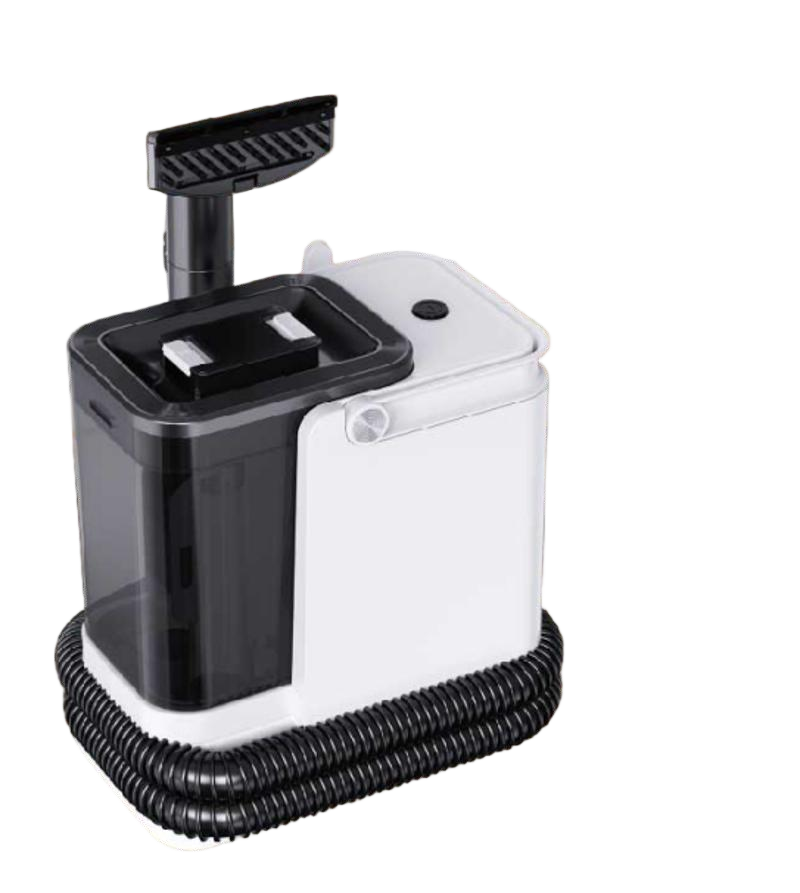
Hose length determines how far you can reach without moving the machine. This matters more than most buyers realize, especially for car interailing and cleaning stairs.
| Hose Length | Best For | Limitation |
|---|---|---|
| 1.0-1.2m | Sofa cushions, small rugs | Must reposition machine frequently for car or stairs |
| 1.5-1.8m | Car interiors, stairways, large furniture | Sweet spot for most users |
| 2.0m+ | Commercial detailing, large vehicles | Adds weight and bulk; slight suction loss over longer path |
Combine hose length with power cord length to get total working radius. A spot cleaner with a 1.8m hose and 4m cord gives you a 5.8m radius from the outlet — enough to clean an entire SUV from one plug point. Our AY-S507 offers this exact combination (1.8m hose + 4m cord), while the AY-S506S extends the cord to 5m for even wider reach.
5. Weight and Portability
Spot cleaners range from 2.5 kg (mini handhelds) to 8+ kg (commercial extractors). The right weight depends on how you carry and store it:
Under 4 kg — Easy one-handed carry, fits in a car trunk, suitable for mobile detailers who move between vehicles. The trade-off is smaller tanks (more refill stops) and usually no steam function.
4-6 kg — The mainstream range. Big enough for 2000ml tanks and steam systems, light enough to carry upstairs. This is where most home and car cleaning needs are best served.
Over 6 kg — Professional territory. Larger tanks, more powerful motors, often with wheels. Best for commercial cleaning businesses, not casual home use.
One tip from our product testing: check the weight when the tanks are full, not empty. A 4 kg machine with 2000ml of water becomes 6 kg in use — a significant difference when carrying it to a second-floor bedroom.
6. Noise Level
Spot cleaners are not quiet. The suction motor and pump together generate 70-85 dB(A) — roughly the volume of a household vacuum cleaner. For home use, especially in apartments, a lower noise rating matters.
All our spot cleaner models are rated below 80 dB(A), which is below the 85 dB threshold where hearing protection becomes recommended for prolonged exposure. When comparing machines, note that every 3 dB increase represents a doubling of sound intensity — so an 83 dB machine is actually twice as loud as an 80 dB machine, not just slightly louder.
7. Attachments and Nozzle Design
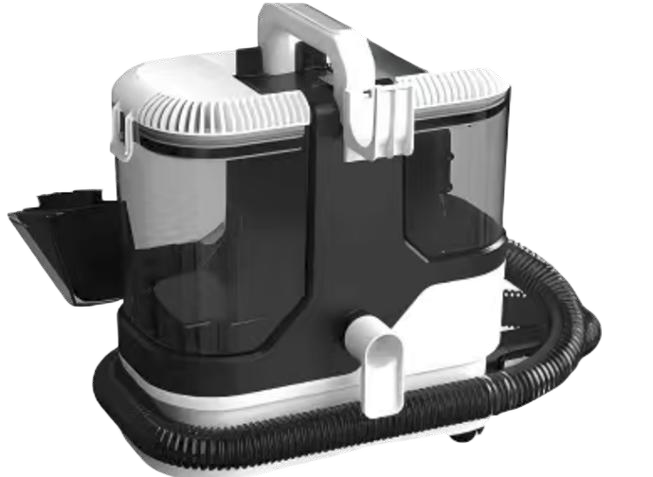
The nozzle is where cleaning actually happens, and different surfaces need different tools:
Wide stain tool (10-15 cm) — The default attachment for carpet and large upholstery areas. Wider coverage means faster cleaning but requires more suction to maintain extraction across the full width.
Narrow crevice tool — For car seat seams, sofa creases, and tight corners. Essential for automotive detailing where stains hide in stitching lines.
Brush nozzle — Stiff bristles agitate the fabric to loosen dried-on stains before extraction. Useful for pet hair embedded in carpet fibers. If the spot cleaner does not include one, verify that a compatible attachment is available separately.
Self-cleaning tool — Some models include a hose-rinse attachment that flushes the internal hose after use. This prevents detergent and dirty water from drying inside the hose and causing odor. The Bissell HydroRinse popularized this feature, and we have incorporated a similar rinse design in our latest models.
Quick Decision Table: Which Spot Cleaner Fits Your Needs?
| Your Situation | What to Prioritize | Recommended Spec |
|---|---|---|
| Pet owner (cats/dogs) | Suction + enzyme-compatible + brush nozzle | ≥ 16 kPa, 2000ml+ tank, pet tool |
| Car detailer | Hose reach + portability + tank size | 1.5m+ hose, < 5 kg, 2000ml tank |
| Small apartment | Compact size + low noise + quick jobs | < 4 kg, < 80 dB, 950ml tank is enough |
| Family with kids | Steam sanitization + large tank | Steam model, 2000ml+ tank, fast heat |
| OEM brand owner | Customization + MOQ + certifications | See our manufacturer guide |
Common Mistakes to Avoid
Buying on wattage alone. A 1800W machine is not necessarily more powerful than a 600W one. Wattage measures total power draw, not suction. The motor efficiency, airpath design, and hose seal all affect actual suction at the nozzle. Always compare kPa ratings.
Ignoring the dirty tank size. A tiny 300ml dirty tank fills up in 2-3 passes on a medium stain. You end up stopping to empty it constantly, which breaks your cleaning flow and adds 20-30% more time to every job.
Using household detergents. Dish soap and laundry detergent create too much foam, which overflows the dirty tank and can damage the suction motor. Only use low-foam carpet extractor solutions. This is the number one cause of spot cleaner warranty claims in our experience.
Skipping the dry-suction pass. After the wet cleaning pass, run the machine over the same area without spraying — suction only. This pulls out residual moisture and reduces drying time by 30-50%. Most people skip this step and then complain about slow drying. Our step-by-step guide on how to spot clean carpet without damaging the fibers walks through the full rinse-and-extract routine.
Our Spot Cleaner Lineup
We designed our four-model spot cleaner range to cover every use case described above. Browse the full specifications and request OEM pricing on our spot cleaner product page.
| Model | Power | Suction | Clean Tank | Steam | Hose | Best For |
|---|---|---|---|---|---|---|
| AY-S508 | 400W | 16 kPa | 950ml | No | 1.7m | Quick fixes, car, apartment |
| AY-S506 | 600W | 17 kPa | 2000ml | No | 1.2m | Everyday home, pet owners |
| AY-S506S | 1800W | 17 kPa | 2000ml | Yes | 1.2m | Deep clean + sanitize, families |
| AY-S507 | 1750W | 17 kPa | 2200ml | Yes | 1.8m | Professional, large jobs, detailers |